Reducing Strategic Risk Through Lean Experimentation
How we informed a build-vs-buy decision for a Carbon Footprint Management (CFM) solution
Project Snapshot
Role
Product Designer (Discovery & Experimentation)
Team
Innovation Team
Timeframe
Jan 2022 – Dec 2022
Audience
Boyum IT Management Board
Goal
Build vs acquire a CFM solution
Methods
Interviews · Fake door · Market analysis
Context & Decision to be made
Sustainability was becoming more visible across the supply chain and increasingly present in regulatory discussions. Given Boyum IT’s positioning in the Supply Chain Management space, this raised a strategic question: could sustainability solutions become a meaningful growth area and a strong fit for our portfolio?
The newly formed Innovation Team was tasked with creating an evidence-based business case to support a management decision on whether to invest in or acquire a Carbon Footprint Management (CFM) solution.
Our approach: Lean Experimentation
Rather than starting with a predefined solution, we chose a lean experimentation approach. The goal was not to validate an idea, but to test assumptions and gather evidence that could support a strategic decision.
We treated assumptions as risks and focused on learning as quickly and cheaply as possible. This meant combining qualitative insights, market signals, and lightweight experiments to understand if the problem was real, if the need was current, and if it was worth investing in at that time.
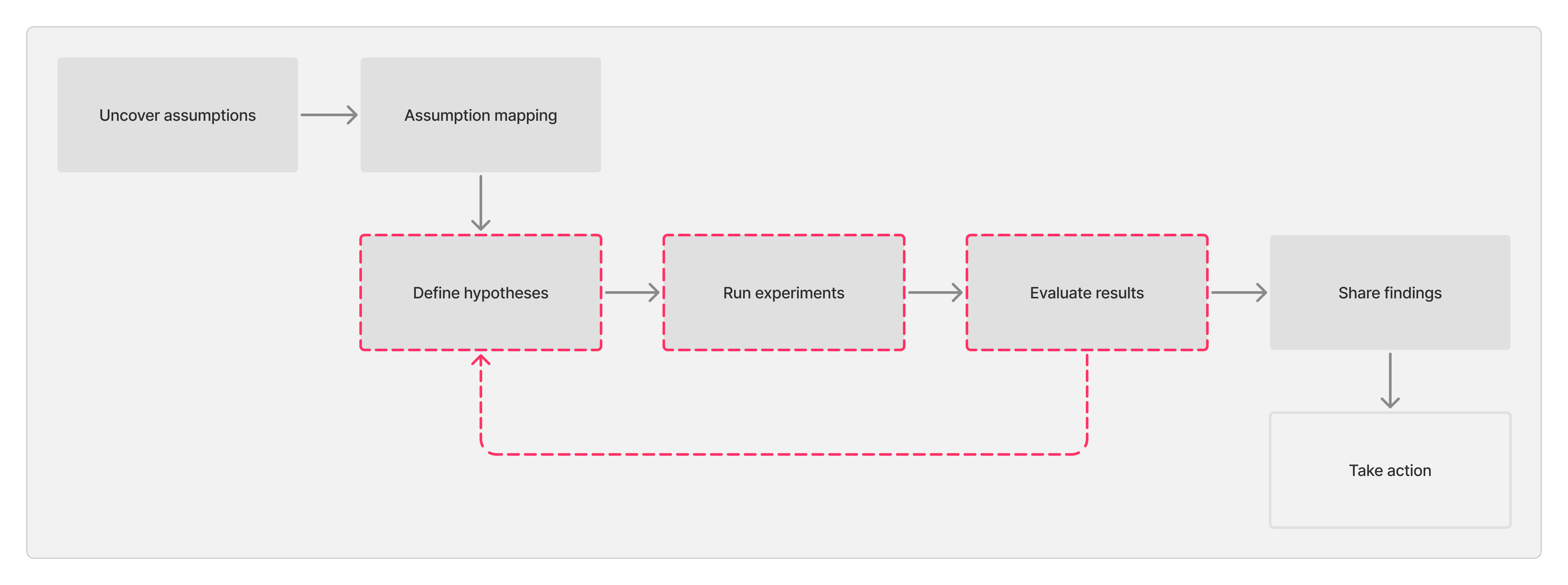
Lean experimentation loop used during discovery.
Diagram by Fernando Aleixo, Director of Product & Innovation
From Assumptions to Testable Hypotheses
We started by explicitly listing our assumptions and treating them as risks rather than facts. Each assumption was classified, prioritized, and tracked as evidence emerged.
This allowed us to focus our efforts on the assumptions that mattered most and directly influenced whether investing in a Carbon Footprint Management solution made sense at all.

Assumptions documented, prioritized, and updated as evidence emerged.
One Critical Hypothesis
Several hypotheses were explored in parallel during discovery. One was particularly important because it directly influenced whether investing in a CFM solution made sense for Boyum IT.
The hypothesis was straightforward:
a Carbon Footprint Management solution is a current need for SAP Business One customers.
While other assumptions were tested at the same time, validating this one early helped anchor our understanding of market readiness and informed how we interpreted the rest of the findings.
Testing the Hypothesis
To test this hypothesis, we did not rely on a single signal. Instead, we combined multiple techniques to balance qualitative insight with observable behaviour.
In parallel, we gathered input from SAP Business One partners, observed audience interest at an SAP event where a CFM solution was presented, and ran a Fake Door experiment on our website.
The Fake Door experiment
The Fake Door was designed to test behavioural interest at low cost and low risk.
Carbon Footprint Management was introduced as a visible option in the website navigation, alongside existing portfolio solutions.
Instead of linking to a real product page, users were redirected to a short Microsoft Form, allowing us to measure unaided interest without building the solution itself.
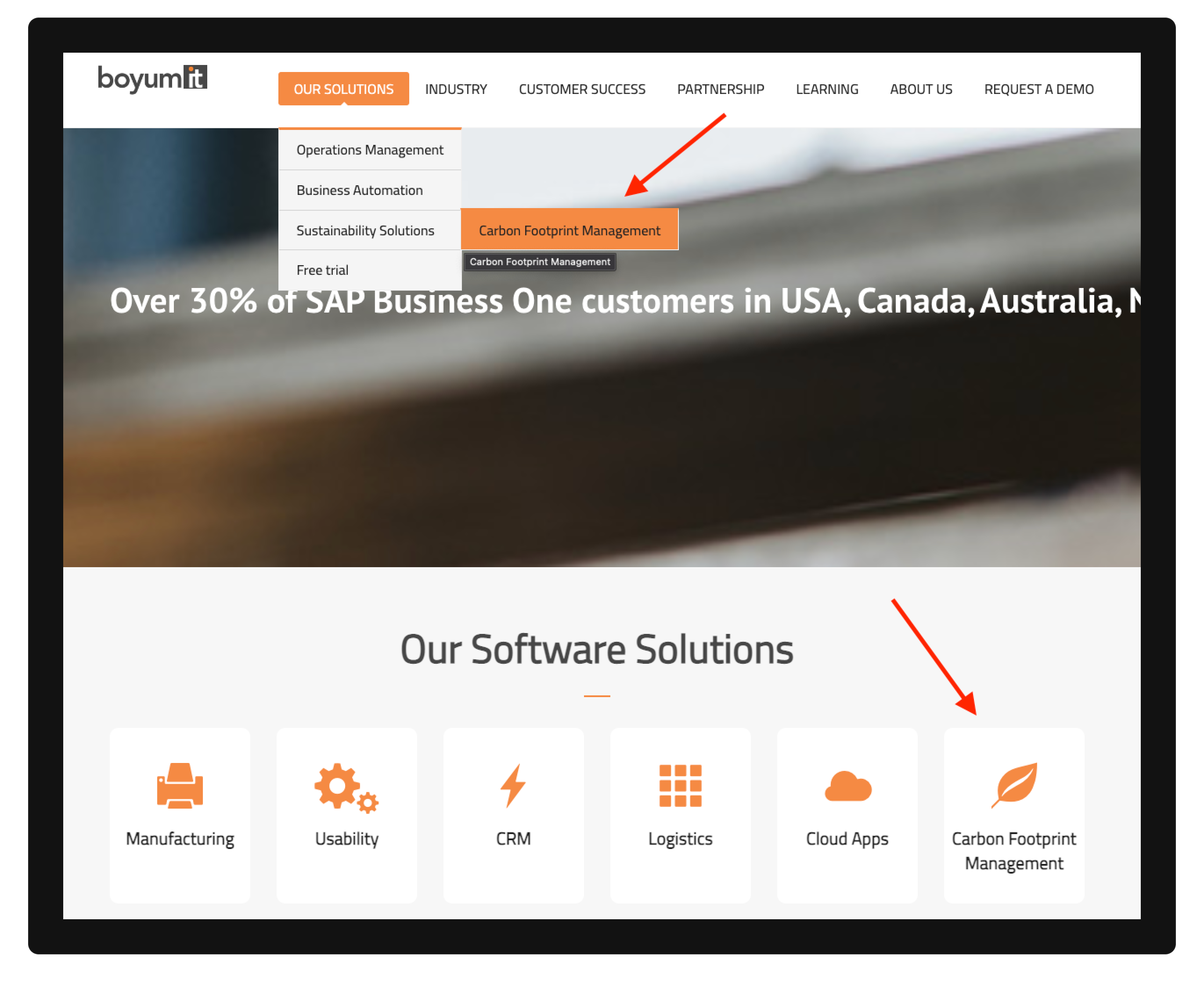
Carbon Footprint Management added to the website navigation as a Fake Door.
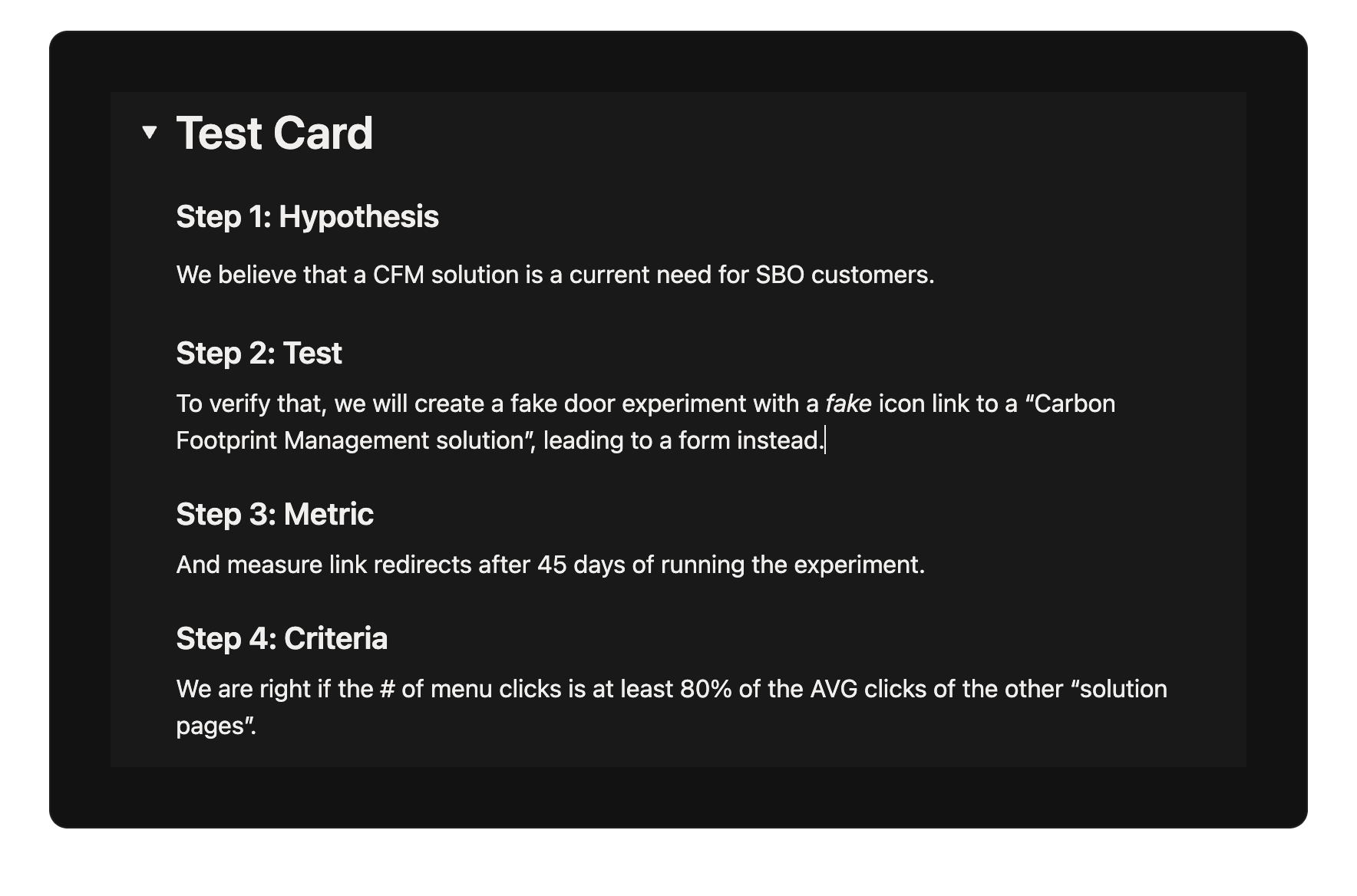
Test definition used to agree on success criteria before running the experiment.
Experiment results
Data collected from Google Analytics:
- Period: 15 Jun 2022 – 01 Aug 2022
- Total clicks: 23
- Benchmark AVG: 14,90 clicks
- Validation criteria: 100% of AVG
While the Fake Door showed some interest, we interpreted these results together with partner interviews and audience reactions at the SAP event to understand what this signal actually meant.
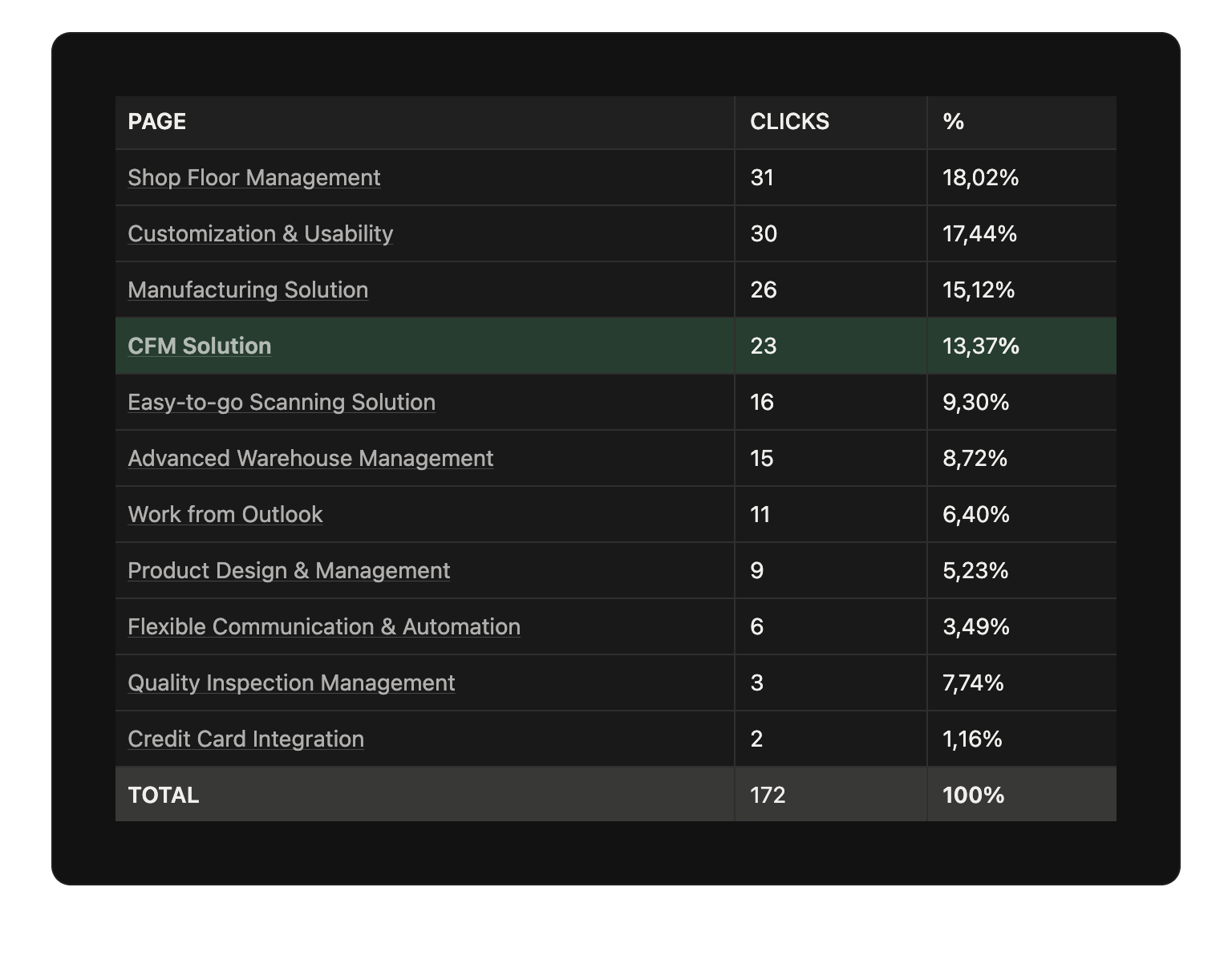
Engagement with the Fake Door compared to existing solution pages.
What we learned from the experiments
Taken in isolation, the Fake Door experiment showed a level of interest that met our predefined criteria. However, this signal became more meaningful when interpreted together with insights from partner interviews and audience reactions at the SAP event.
Across these inputs, a consistent pattern was observed. There was curiosity around Carbon Footprint Management, but the need was not perceived as immediate. Partners reported limited urgency from their customers, and audience engagement at the event suggested awareness rather than active demand.
The combined evidence pointed to a market that was reactive rather than proactive. Interest existed, but it was largely driven by anticipation of future regulations rather than by current operational needs.
Decision & Outcome
The insights from discovery and experimentation were consolidated into an evidence-based business case, covering market signals, risks, financial considerations, and strategic fit. This case was presented to the CTO, to support management's decision on next steps.
Based on the combined evidence, the decision was not to pursue a CFM solution at that time. There was interest, but the market was assessed as reactive, with demand expected to increase only once regulations became more concrete for SMBs.
Rather than investing prematurely, the initiative was intentionally parked.
Reflection
This project reinforced that product design is not only about shaping solutions, but about enabling good decisions under uncertainty. In this case, the most valuable outcome was not a shipped product, but the clarity to decide not to build.
My contribution focused on making uncertainty explicit and actionable.
I framed assumptions as risks, helped design experiments to test them quickly, and worked closely with leadership to synthesize the findings into a business case that supported a clear decision.
Presenting this work to the CTO emphasized the role of product design in supporting clear decisions, not just reporting findings.
What I took forward
- Design work to answer questions, not just to produce outputs.
- Define success criteria before running experiments.
- Prioritize clear decisions over visible progress.
Copyright
© 2026 — Ionut Andrei Sacaleanu
Contact
Links